Thursday, February 25, 2021

First Pop Up at Wild Asparagus Table from Peru

Pandemic has really tested our patience and our tolerance. I am beginning to forget what a normal life used to be. In good ole days, my Foodie friends and I would meet month after month at our Wild Asparagus Table to enjoy the international cuisine of the world. It was a potluck affair, Each person studied the food, the culture and then demographics of the place,  tried one dish of that particular country and we would create a large buffet table on the big day. It was a party nobody wanted to miss.

Things have changed. Not that we have lost touch with each other. Nah! We meet online and have enjoyed the virtual feast and festivals, some live talk shows and specially where food is concerned, we are wiser now. Lot of food knowledge has flooded our homes through Insta-lives and Zoom sessions, nevertheless, we still craved for physical presence.

In July2020, all members of WAT had cooked Peruvian cuisine and shared it virtually, I had even blogged about it Here , we all cooked but ate in our own house sharing it with our family members. It was Pandemic, remember, so we had no choice. But testing the patience of a foodie is a tricky affair.


So, finally WAT happened, potluck changed to pop-up. We braved the virus, followed the Covid 9 norms, lips sealed, hidden behind the mask, private transport arranged, hygiene and social distance in place, and we met at the Ananya’s cook-studio at Wadala to enjoy the deliciousness of Peru Cuisine specially prepared by Ananya Banerjee.


As we entered the studio, it seemed like we had checked into a 5star restaurant, the ambience was vibrant with state-of-art table deco, the cutlery, the flowers, the lamps, it was the most romantic set up. And what a joy of meeting everybody after what seemed like ages. It brought back the memories of our first French WAT meeting on that heavy rainy day. (remember our dripping wet meeting). After the initial formal chat of eye expressions and inaudible voice chats, it was time to peel off the masks and settle down to have sit-down meals. 

Wine glasses clashed, with red/white smiles and cheers touched every corner of the rooms, the twinkle in the eyes glowed as the first course of Empanadas made its appearance on our table.


Empanadas are like samosas, stuffed with minced meat, but they are baked instead of frying” explained Ananya, as we chomped on small bites. This was served with cabbage salad sprinkled with white and black sesame seeds. It was exceptionally good.


Plates was cleared after the first course, making room for next course ‘Caviche’ Technically, Ceviche is not raw, but it’s not cooked either. Cooking requires heat, and ceviche never touches a skillet. The acid from the lime “cooks” the fish in a chemical process called denaturation. Tuna fish was marinated in lime juice and citric juices and and served on a bed of salad leaves and veggies. Each chunk of fish had amazing buttery flavours.


This was followed by Polo a la Bresa, a roasted chicken served with an authentic creamy dipping sauce along with the cup full of fried rice (Arroz Chaufa) and potatoes stuffed with pepper, smoked paprikas and olives.  

Food was authentic and was aptly paired with California Born West Chardonney, (refreshing n full of flavours), and Born West Cabernet Sauvignon, that had aromas of red current and Raspberries, (combine with vanilla and pepper.) Sincere thanks to Shweta Mohanti from #Astraspirits @bornwestwines for the compliments of wines.


I had my fill (actually a bit more than what I could eat) but then who can refuse a dessert? Specially Tres Leches that was topped with fresh fruits. Tres Leches cake is light and soft sponge cake soaked in sweet three milk mixtures and topped with whipped cream. The translation of Tres Leches from Spanish is three milks. 

Evening was spent with lively conversations and laughter and time ticked on till it was time to say our good byes with the promise to meet once again with yet another cuisine from other country, at another venue by other creative home chef. 
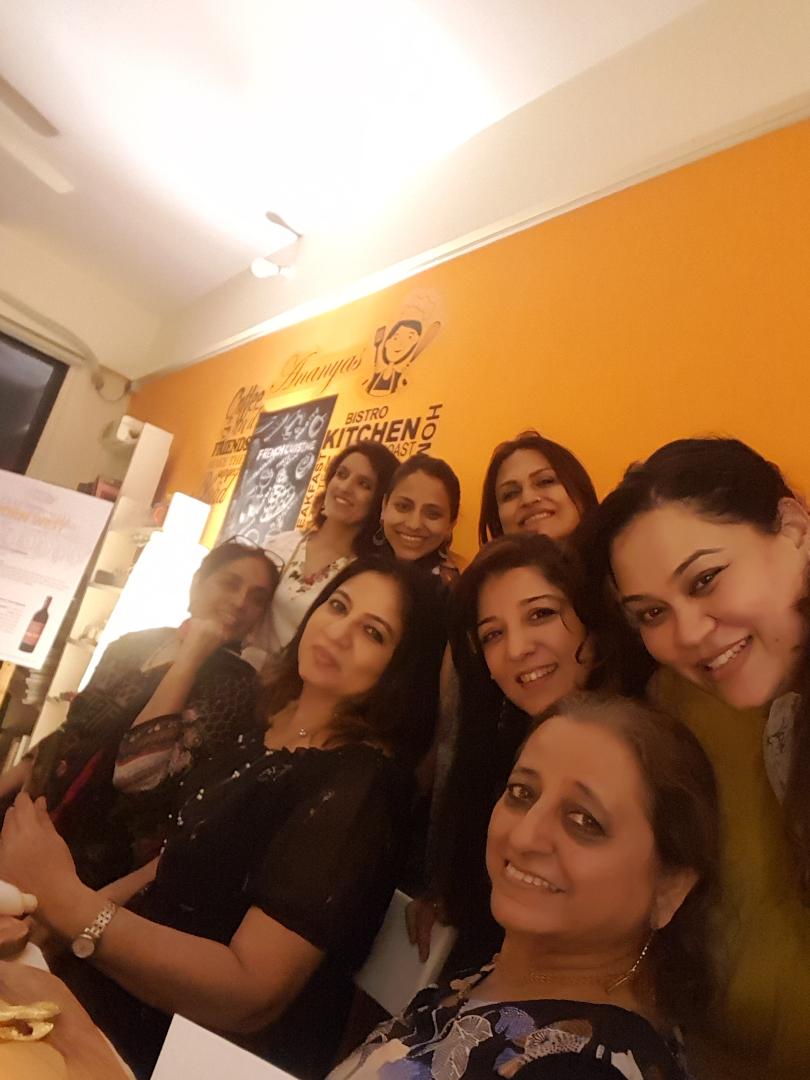


With a great support of @Salonim2 and @chefananyabanerjee of #FBAI, the same theme of cooking international food will continue. There will be regular pop-ups by home chefs of Mumbai at different venues, the food will be hosted and invitees can enjoy the food for a fee. Saloni Malkani and Ananya Banerjee will help the home chefs in organising these pop ups, share their culinary expertise, surrounded by complete ambience of restaurant type set-up, and these delicious dinners can be arranged for private/corporate parties too. 

But till then, I plan to take a bigger bite....


Monday, February 8, 2021

Virtual Party for Dhal Divas – Jan2021

Pandemic has brought me closer to my foodie community. I have learnt a lot without stepping out of my comfort zone. There have been so many series of Instalives that sometimes I have not been able to cope up and have caught up by watching IGTV (thank God for that)


Dal divas is celebrated by my food community every January but this year due to pandemic, the celebration happened online and it stretched over 11 days. This is initiated by @Rushinamg and with the help of her #11daysDhal team, I got to learn various types of dhal. 22 different dhals were discussed online. 

Generally speaking, I don't normally eat dhal everyday. I get confused with too much variety of food. For lunch, its normally only one cooked vegetable  with chappati or rice. Dhal, for eg Moong dhal is usually cooked when there are fried potatoes or bhindi fry. Then we have tidhali (combination of 3 dhals,) that I eat with chappatis, or Channa dhal with Pakwan or Tuddi channa dhal.  Sindhi curry is cooked on festive days or when there is family gathering.  

I was surprised by the diverse ways the dhal was cooked over 11days. the tempering with pure ghee made the dhal look so appetising. Some cooked dhal with meat (dhal ghosh) and some with fish heads(Bengali Maachar Maatha). Some roasted moong dhal before cooking, some sprouted the beans(Matkichi), some powdered the dhal(Kumaoni Ras) before cooking. Some dried the dhal to make Vadis and some roasted to make sweets(dal da Halwa). I could never have imagined that dhal had so many different ways of cooking and the method varied from region to region, North to South, East to West of India. There were  interesting discussions and I tried to watch most of the sessions

I was inspired to cook too. I contributed in a small way by cooking Rajma   You may watch the recipe of Rajma on my u-tube channel 


And also enjoyed khichdi seasoned with condiments from all over India at Tresind. 


This week I prepared Ragda, served it as street food with Patties and it was quite delicious


1. Soak the 2cups Ragda over night. 

2. Boil it with 5 whistles. 

3. In a pan, 2tbsp heat oil. 

4. Add 1tsp Cumin seeds, 2 Bay leaves, 2 Cloves, 2 Cardamoms and 1tsp Chana masala. 

5. Add 2finely chopped Onions. Fry till light brown. 

6. Add 2tbsp garlic-chili-ginger paste. 

7. Add 2 chopped Tomatoes. 

8. Add 1tsp turmeric powder, 2tsp coriander powder, 1tsp red chilli powder, 2-3 Kokum flowers. 

9. Cook till oil begins to separate. 

10. Add the boiled Ragda. 

11. Mix it well. 

12. Add 2glasses of water. 

13. Add salt as per taste. 

14. Let it boil. 

15. Lower the flame and simmer for 45 minutes. 

16. Garnish with finely chopped onions, lime juice, red chili powder, cumin powder and finely chopped coriander leaves.


Wednesday, January 20, 2021

Home chefs Of Mumbai – Part 38 – Kalpana Mirchandani

Most of the Indian restaurants use too much oil in their cooking. The gravy glitters and floats in the pool of oil. The parathas are fried in too much ghee. It tastes good, it is the integral part of cooking, no doubt, but in this weight conscious world, many would want to avoid it. 

Then there is new fad, people are too much awed by Olive oil, so much so, that most of them are not even aware we have a better range of healthy oils in our own country 

Infact,  different oils are favoured across India, that mainly depend on the climate and food preferences of that region. Peanut in Gujarat, Coconut in the South, Sunflower in Maharastra, Mustard in Bengal, and with people moving around, tastes have merged and people are experimenting different flavours of oils in different cuisine. There is more variety now. Healthy oils have their own properties, they all are good. But when using it for first time, it is better to start with moderation  

Its good to explore the area of cooking in edible oils and getting the right kind of oil for use.  Its all about medium of transfer of heat. Besides cooking and deep frying, some oils are for enhancing the flavours (in salads), some for garnishing (in tampering), some for emulsification (in Mayonaise) and some for preservation (in pickles).

We learn from personal experience about its use. Oil gets rancid when exposed to oxygen, it should be sealed properly or else the flavour changes so does the colour.

Kalpana Mirchandani can be trusted for her delicious food that has just the right kind of oil as per taste.


Kalpana Mirchandani had a happy childhood surrounded by family of  food lovers. Cooking has been her passion throughout her childhood and her adult life. 

She spent some years in Bangkok and catered home-cooked food to expats Indians and even to Thai locals. Her Biryanis and Butter Chicken were highly appreciated. She catered customised food as per their taste/interest and served party orders too. She even sold Pizza and Pastas 

When people appreciated my food, I kind of got a special thrill and I am inspired to cook even better.” She says.

She has travelled around the world and every time she tastes something new, on her return back home, she will try something similar for her son and brother who are foodies. 

I still remember that amazing grilled Salmon with chestnut, crab and farro Rissoto that I ate at Tampa Bay’s multi faceted food scene at Florida.  I did try to replicate that taste but I crave to eat that salmon again.” She says


Kalpana Mirchandani specialises in several cuisines such as Sindhi, Punjabi, Thai cuisines.  She loves making dips and sandwich fillers as well. She is proficient in party orders and specialises in finger food. She has been gradually adding her own variety of fillings, dips, finger food and other main course items to her menu. 

Nowadays most people like to keep stuff  like Mexican dip with nachos  to go with it. Chicken tikka, paneer tikka, to pair with garlic bread, rotis as quesadillas.  lavash or garlic toasties with hung curd, garlic dip, cheese corn mushroom fills with volevones...or canapes, and also small bites of pakwan topped with dhal, tamarind and mint chutney and onion salad. The choice is endless.” She confirms


During her childhood, her dadi used to cook yummy Sindhi cuisine for the family. Her favourite dish has always been sindhi mirchi bhajiya. That dish has been her first memorable moment of having tasted a yumm dish .

Kalpana is happy to share the recipe of traditional Sindhi Recipe of Mirchi Ka Bhajiya


1. Slit 10 large sized light green chillies from centre all the way down on one side. 

2. Extract most of the seeds. 

3. Mix the dry masalas like  1tbsp coriander-cumin powder,  1tbsp pomegranate powder, 1tsp black salt, 1tsp lime juice. 

4. Fill in this masala mixture in between the chillies and keep aside for 1 or 2 hours. 

5. Mix 1cup gram four in 1/2cup water and make a smooth batter.  

6. Add salt,  1tsp turmeric powder.  

7. Dip in the chillies in the gram flour batter

8. Deep fry till golden brown and crispy. 

9. Serve with mint chutney.


Follow her Insta handle @Kalpana.mirchandani 

Kalpana can be reached on her Watsapp no 99200 49543


Related Posts Plugin for WordPress, Blogger...

p1

Thank you for your appreciation